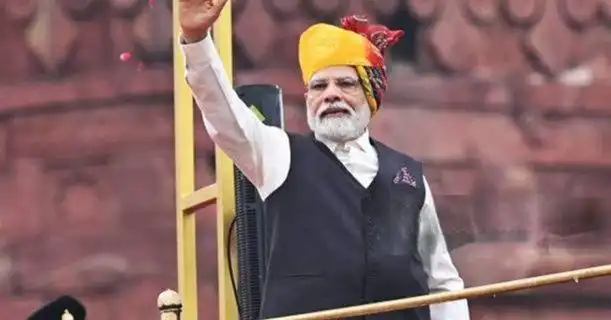
In its 12th year, Modi government set new benchmarks
As 2025 draws to a close, Narendra Modi is in his 12th year as Prime Minister. In most democracies, such longevity signals consolidation, caution, and a gradual retreat into legacy…

India’s political landscape over the past decade has been defined by a governance model that fuses mass political mobilization, organizational discipline, leadership centrality, and a results-driven development agenda. Understanding this “BJP System” is key to explaining India’s contemporary welfare delivery, electoral durability, national security posture, and administrative reform trajectory. The BJP System Program studies how ideological coherence, institutional capacity, and high-frequency public engagement interact to produce governance continuity and long-term political stability in the world’s largest democracy.
The BJP System program conducts comparative research on party organization, leadership psychology, voter behaviour, policy communication, and state capacity in welfare execution. We analyse mechanisms such as booth-level networks, targeted last-mile delivery, citizen-centric communication, digital governance tools, and values-based nationalism as drivers of performance-oriented politics. We develop policy insights on scalable and constitutionally compliant features of this model to inform scholars, administrators, and governments seeking to strengthen democratic responsiveness, institutional efficiency, and development-centric political accountability.
As 2025 draws to a close, Narendra Modi is in his 12th year as Prime Minister. In most democracies, such longevity signals consolidation, caution, and a gradual retreat into legacy…

In the high-stakes chessboard of Uttar Pradesh politics, every move is deliberate, and every decision is a well-thought-out, long-term strategy. The appointment of Pankaj Chaudhary, Union Minister of State for…
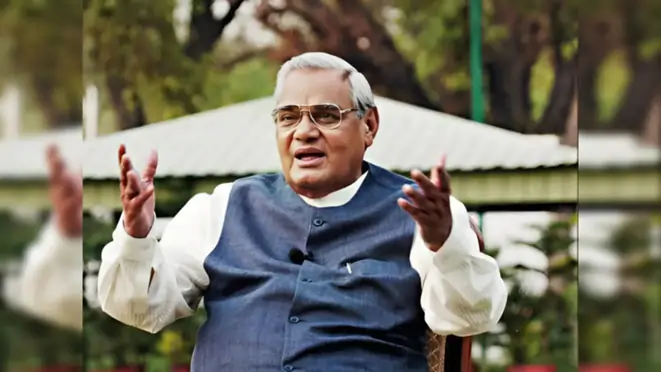
Atal Bihari Vajpayee was not only a politician and Prime Minister, he was the conscience-keeper of India’s democracy and a statesman who taught the nation how to combine courage with…
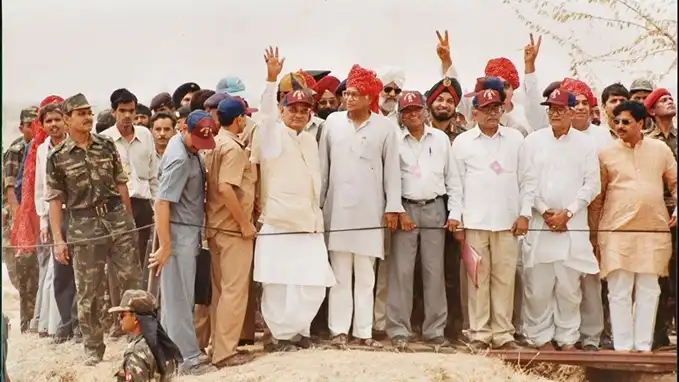
In the collective consciousness of the nation, good governance — predicated on reforms with a human face — remains synonymous with my mentor and former Prime Minister (PM), Atal Bihari…

There were two distinct messages from last month’s assembly elections in Bihar. The first centred on the remarkable ability of the Bharatiya Janata Party and, by implication, the National Democratic…
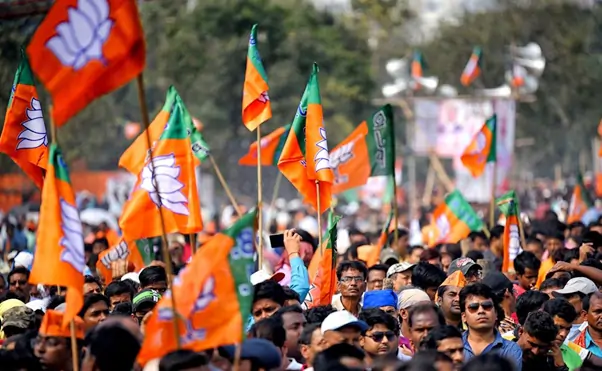
For much of independent India’s history, politics was shaped by a sense of entitlement that confused inheritance with legitimacy. One family and one party came to believe they were born…

The people of Bihar have delivered a mandate whose weight goes well beyond the arithmetic of seats. The National Democratic Alliance (NDA) has won 202 of the 243 seats in…