The next five reforms India needs
For the first half of this year, India has grown at 8 per cent, defying most expectations. Despite volatility in global trade and tariffs, India’s exports grew by nearly 20…

India’s transformation into a developed economy requires an economic architecture that unlocks productivity, accelerates investment, expands entrepreneurship, and generates high-quality employment across sectors and regions. The next wave of reforms must translate macroeconomic stability and digital progress into deeper structural change in land, labour, capital, technology, and regulatory efficiency. The Economic Reforms program examines how India can pursue growth that is not only rapid, but innovation-led, opportunity-creating, and resilient, enabling the leap from lower-middle-income to advanced-economy status within a generation.
The Economic Reforms program integrates macroeconomics, regulatory analysis, institutional design, and geoeconomics to produce implementation-ready policy pathways. Our research evaluates priorities such as predictable and simplified taxation, manufacturing and export competitiveness, logistics and trade facilitation, capital-market deepening, urban economic transformation, MSME upgrading, and digital public infrastructure as a platform for innovation-led growth. We also assess how competitive federalism, labour-market flexibility, and technology diffusion can enhance productivity at scale. We seek to develop detailed policy frameworks to support a high-growth, investment-magnetic, innovation-driven, and job-rich economy aligned with the vision of a Viksit and Atmanirbhar Bharat
For the first half of this year, India has grown at 8 per cent, defying most expectations. Despite volatility in global trade and tariffs, India’s exports grew by nearly 20…

Anyone who has travelled from Delhi through Rajasthan on the new Delhi-Mumbai expressway would have noticed the rapid transformation that is sweeping the state. In many ways, Rajasthan is a…

As we step into 2026, public debate in India should begin with a little New Year discipline. We should welcome scrutiny, even sharp criticism, but we should also insist that…
As 2025 draws to a close, the loud headlines are easy to spot, but what is easier to miss is the quieter work of governance, the steady, week after week…
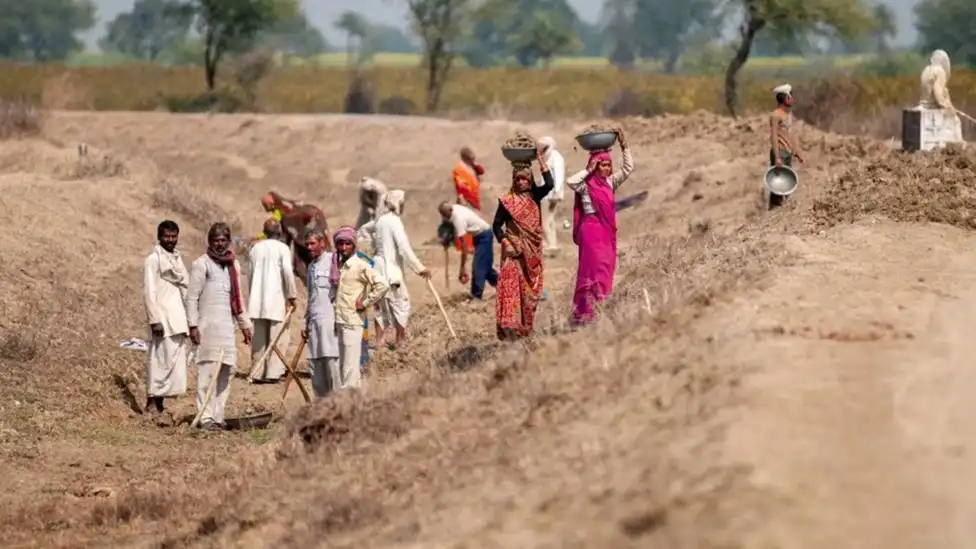
The President of India has assented to the Viksit Bharat – Guarantee for Rozgar and Ajeevika Mission (Gramin) Act, 2025, enhancing the statutory wage employment guarantee to 125 days and…

India’s economic policymakers are in the final days of a gritty, combative year. There have been achievements — relatively high GDP growth rates — but demonstrable challenges too. The sanctions…

India’s labour market has been shaped by a complex legacy of well-intentioned but ultimately restrictive regulations. For decades, labour laws designed to protect workers ended up discouraging firms from growing,…
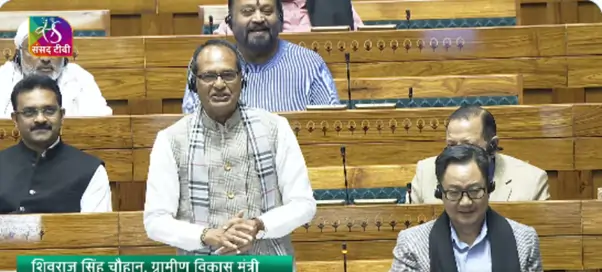
Public debate around welfare reform is both necessary and healthy. Concerns expressed in some quarters over the Viksit Bharat-Guarantee for Rozgar and Ajeevika Mission (Gramin) (VB-G RAM G) stem from…